
Categories
Blog

The DEGIS Buddy Program: Making Germany Feel Like Home

Carolina Figueiredo is DEGIS General Coordinator and has been running the Buddy Program since its creation in 2021.

My Own Journey as an International Student

Five years ago, I moved from Brazil to Berlin to pursue my master’s degree. It was a life-changing decision, filled with excitement and possibility, but also plenty of challenges. While my university supported me academically, I often wished I had a peer who truly understood what I was going through: someone to guide me through the maze of German bureaucracy, help me discover the best spots in town, and share the everyday struggles and joys of being new in a foreign country.

Back then, there was no DEGIS and no Buddy Program. Today, thousands of students have access to exactly what I once missed, a community where support, connection, and friendship are only one application away.

The Buddy Program at a Glance

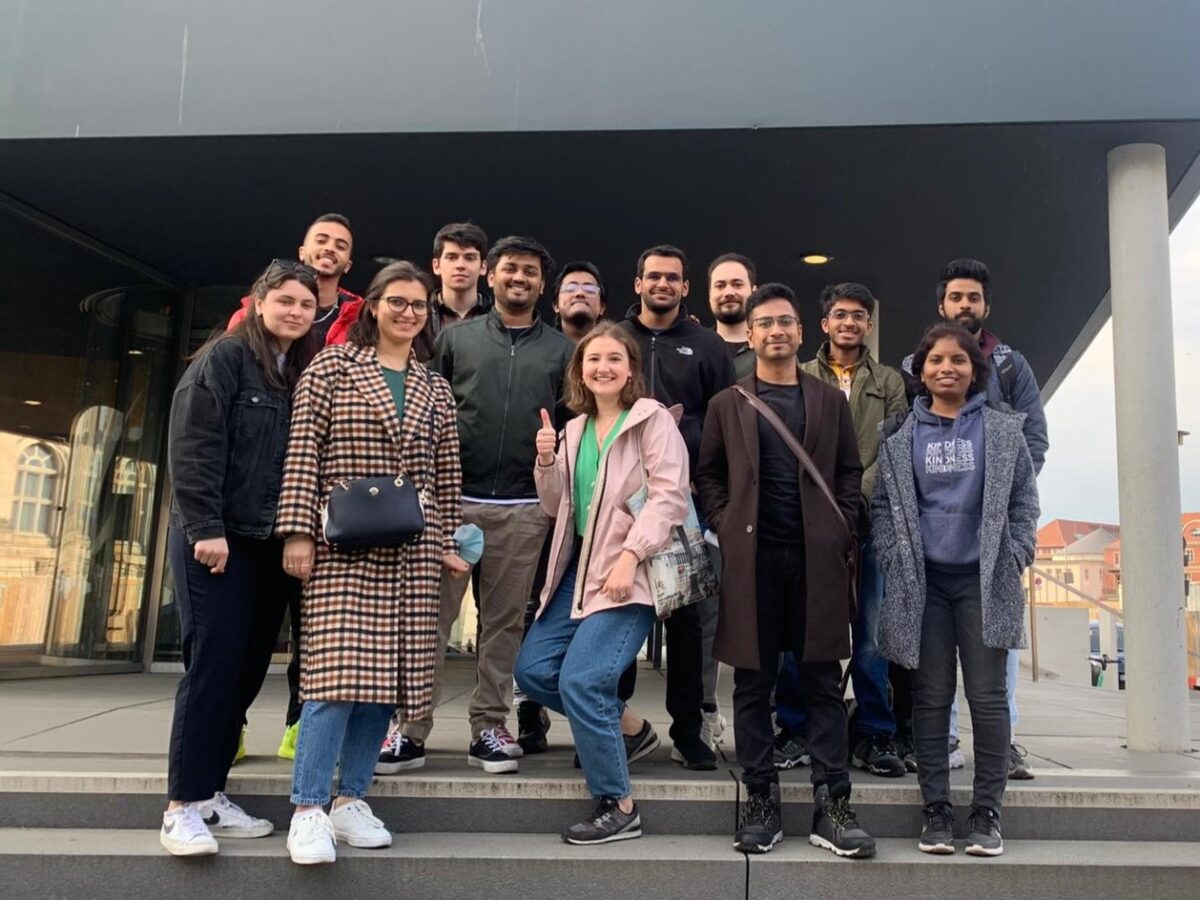
Since its inception in 2021, the DEGIS Buddy Program has supported over 1,000 international students across Germany. The idea is simple but powerful: connecting Newbies, students who have just arrived in Germany, with Veterans, students who have already been here for at least six months.
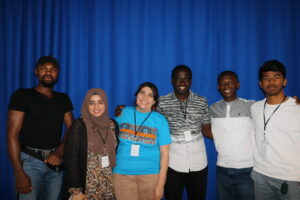
The program is built on the principle that no student should feel alone when starting life in a new country. Whether it’s tackling German paperwork, making friends, or exploring the city, your buddy is there to make the transition smoother and more enjoyable!

For Newbies: Navigating Your First Months

If you’re just starting your studies in Germany this semester, the Buddy Program is designed with you in mind. As a Newbie, you’ll be paired with a more experienced student who knows what it’s like to walk in your shoes.

Your buddy can:

  • Help you get through bureaucracy like Anmeldung (address registration), opening a bank account, or finding health insurance.
  • Show you how to navigate university systems, register for exams, and find study spaces.
  • Introduce you to student life: clubs, events, affordable shopping spots, and hidden gems in your city.
  • Most importantly, be a friend, helping you settle in and feel at home.

Prerna, a Newbie in Trier, shared her experience:

“My experience with the buddy program was fantastic, and that is almost entirely because I was paired with Rachit Nishad. He has become a close friend. He not only helped me with the stressful things like finding accommodation and sorting out my German paperwork but also showed me how to enjoy the city. Thanks to him, I’ve explored amazing hiking trails and gotten to know the best places around Trier.”

For Veterans: Giving Back and Growing Together

If you’ve already been in Germany for six months or longer, you can become a Veteran Buddy. This role allows you to share your experience, help a newcomer overcome the challenges you once faced, and build international friendships along the way.

As a Veteran, you’ll also benefit:

  • You’ll gain valuable intercultural skills and improve your communication.
  • You’ll earn a volunteer certificate of 6 hours, something that can strengthen your job or scholarship applications.
  • Want to do more? Become a Local Leader in the program and receive a 12-hour certificate.

Vanessa, a Veteran in Schmalkalden, reflected on her journey:

“Overall, I really enjoyed engaging with the Newbies. Everyone was friendly, open, and eager to share their culture, which made the exchange both enriching and enjoyable. It was also a great opportunity for me to improve my English skills with their support. Additionally, it was fascinating to connect with people from different countries, gain international perspectives, and develop intercultural communication skills while building meaningful connections.”

How the Program Works

The Buddy Program is structured to ensure meaningful, supportive, and fun interactions. Here’s how it goes:

  1. Application Process: Visit our website and complete the Buddy Program application form before September 14, 2025, 23:59 CEST.
  2. Matching: After applications close, DEGIS pairs Newbies and Veterans based on their cities, ensuring local connections.
  3. Activities: For six months, you and your buddy will meet, explore, and support each other. Activities can be as simple as grabbing coffee, going to a student event, or tackling bureaucracy together.
  4. Monthly Check-ins: DEGIS runs quick surveys to see how the program is going, encouraging buddies to share pictures of their activities.

This setup ensures that everyone gets the most out of their experience and feels part of a vibrant community.

A Unique Experience in Germany

The Buddy Program is much more than a practical support system; it’s a way to build a home away from home. For Newbies, it makes the first months less stressful and more exciting. For Veterans, it’s a chance to give back and create lasting international friendships.

If I could go back to my first semester in Germany, I would have joined in a heartbeat. Today, I’m glad so many international students have this chance.

👉 Register now and take the first step towards an unforgettable experience in Germany! Applications close on September 14, 2025, at 23:59 CEST.

P.S – This year’s DEGIS Buddy Program webinar recording is now on our YouTube! Take a look here 

Categories
Blog

Thriving, Not Just Surviving: A Queer International’s Journey with Mithil Barath

At DEGIS, we believe in sharing the real, unfiltered stories of international students shaping Germany’s future. In this interview, Mithil Barath opens up about his journey as a queer international—from rural East Germany to building inclusive spaces and raising a family in Cologne.

1. You’ve had quite a journey—moving to Germany as a student, staying to work, and now building a life and family here. How has your experience as a queer international shaped your personal and professional path in Germany?

Mithil: My journey to Germany wasn’t planned, it was love that brought me here. I had been living in Hungary, and when my now-husband and I decided to build a future together, I moved to Schmalkalden, a small town in eastern Germany, to start university. That transition wasn’t easy. The culture shock was real, and as a queer international, I often felt invisible. The social climate was conservative, and there wasn’t much space for people like me.

But I didn’t let that stop me. I carved out my own space, both personally and professionally. Eventually, I co-founded the DEGIS chapter in Schmalkalden, creating a platform for international and queer students like myself who were craving connection.

Now, we’ve moved to Cologne, a city that feels much more like home. It’s where I work, raise my twin baby girls (yes, twins!), and finally feel like I can breathe a little easier. But the journey through visas, marriage registration, and endless paperwork? A whole challenge on its own.

Still, every obstacle has made me stronger and more determined to create spaces where queer internationals aren’t just surviving, but thriving. My story isn’t the exception. It’s one of many. And it’s time we make that more visible.

2. Can you tell us about a moment—within DEGIS or beyond—when you truly felt seen and supported as a queer person in Germany? What made that moment meaningful for you?

Mithil: When I started university in Schmalkalden, there was no space for internationals, let alone queer students. I looked around and realized no one was coming to create that space for us. So, I reached out to multiple organizations, and DEGIS was the one that answered.

That response changed everything. With a few other students, I helped launch DEGIS Schmalkalden. We started small, but it grew into something powerful and today, it has over 50 volunteers and a full board. From that, we built clubs and safe spaces for marginalized voices, including one specifically focused on queer expression and the arts.

That moment of being seen, of seeing others show up and build alongside me, was deeply meaningful. For the first time, I felt like I wasn’t just existing in Germany. I was part of something. I was helping to shift the narrative.

3. You’ve led some important initiatives within DEGIS. What motivated you to bring LGBTQAP+ topics into our network, and what impact do you think these initiatives have had so far?

Mithil: What motivated me was simple: silence is never neutral. If we’re not talking about queer topics—especially in international spaces—we’re ignoring a huge part of people’s lived experiences.

I brought LGBTQAP+ issues into DEGIS because I didn’t want another student to feel the kind of isolation I once did. That meant organizing safe groups for expression, pushing for visibility during Pride, and making space for people to share their stories with no filter, no shame.

The impact? It’s in the people who message me after an event saying, “I finally felt seen today.” It’s in the growing number of queer internationals stepping into leadership. It’s in DEGIS showing up—not just during Pride Month—but throughout the year. There’s still so much to do, but we’ve made real progress. And I’m proud to be part of that shift.

4. In your view, how does Germany compare to other places when it comes to creating a safe and inclusive environment for queer internationals? Where are we doing well, and where is there still work to do?

Mithil: I’ve traveled across Europe, the Americas, and Asia, and while I hoped Germany would feel more inclusive, the reality is mixed. Yes, cities like Cologne and Berlin offer more visibility and access. But move outside those bubbles, and it’s a different story.

In smaller towns—especially in the East, being queer and international can still feel like an uphill battle. You’re navigating cultural differences, legal systems, and social stigma all at once.

Germany has made some progress: healthcare is accessible, same-sex marriage is legal, and Pride is celebrated in major cities. But legal rights don’t always translate into lived equality, especially for trans people, BIPOC queer folks, and non-EU internationals.

If Germany wants to live up to its progressive image, it needs to do more than tolerate queer people, it needs to actively support and protect them. Right now, that support is uneven at best.

5. Looking ahead, what kind of support or changes would you love to see from communities like DEGIS to better uplift and empower queer international students and professionals?

Mithil: I’d love to see DEGIS create more dedicated spaces for queer students—spaces that aren’t just inclusive but intentional. We need recurring events, mentorship programs, mental health support, and collaborations with LGBTQ+ and trans-led NGOs.

Let’s not wait for Pride Month to show support. Let’s weave queer inclusion into everything, from career panels to leadership programs. Let’s fund projects by queer internationals. Let’s invite them to lead, not just participate.

The truth is, queer internationals carry unique strengths: adaptability, courage, creativity. But we also carry unique burdens. DEGIS has the platform to be a true ally, not just in words, but in action.

And I do believe it’s moving in that direction. I’ve seen it. I’ve helped shape it. But let’s keep pushing, bigger, bolder, and with all the love and fire we’ve got.

Want to be part of a community that celebrates you—just as you are?

Whether you’re looking for connection, leadership opportunities, or simply a safe space to grow, DEGIS is here for international students and professionals across Germany.

Join DEGIS today and help us build a more inclusive, supportive future, together!

Categories
Blog

Why Volunteering Is More than Giving Back

Written by Nur Banu Yavuz

Volunteering is often associated with giving time, energy, and effort. And while this is certainly part of the story, there’s another side that doesn’t get talked about enough: what you gain by volunteering.

I see volunteering not just as a contribution, but as meaningful change. Whether you’re new to a place or want to deepen your roots there, volunteering can open doors you didn’t even know existed.

Let’s start with the basics. DEGIS is a community that supports international students in Germany—through events, reliable information, and most importantly, a sense of belonging. But it’s not only built for international students, it’s also built by them. Volunteers are at the center of everything we do.

What does it really mean to volunteer?

When people think of volunteering, they often imagine helping at events, sending emails, or managing logistics behind the scenes. These things happen—but they’re just the surface. What’s really underneath is growth.

You learn how to lead a team, organize initiatives, and solve problems in real time. You find your voice in a new country or in a new context. You shape the culture and values of your own community. This is leadership in action, and it’s very real.

At DEGIS, volunteers often step into roles where they can actively influence how a local City Chapter works. From organizing language meetups to planning nationwide conferences, there’s a space for your ideas—and the support to bring them to life.

And the best part? You don’t need to come with a long list of experiences. DEGIS values curiosity, commitment, and collaboration. If you’re open to learning, there’s a place for you here.

Personally, my journey with volunteering began before I even arrived in Germany. Back in Turkey, I was involved in various initiatives—from participating in a social responsibility club in high school to actively working with a youth foundation fighting erosion and promoting environmental sustainability.

These experiences shaped the way I see the world and taught me early on that meaningful change often starts with small, consistent actions. They also made me more confident and ready to take initiative when I joined DEGIS—because volunteering had already shown me what it means to be part of something bigger than myself.

Tangible Benefits That Actually Matter

I believe that time and energy deserve to be appreciated, and one way to show it is through access to benefits that make a real difference in our daily lives as international students.

When you join DEGIS as a volunteer, you get access to special discounts on platforms and services you likely already use—or plan to. This includes language courses, online learning tools, event tickets, and merchandise (you can find the full list on our website).

These discounts aren’t just random perks. They’re carefully selected to support your personal, academic, and professional journey in Germany.

Leadership Without Pressure

Leadership doesn’t mean doing everything alone. It means collaborating, experimenting, asking questions, and growing together. Whether you feel more comfortable behind the scenes or stepping up to lead a team, there’s space to explore at your own pace.

You’ll also be part of a national network of other volunteers navigating the same learning processes. We support each other—through peer exchange, check-ins, and national calls where everyone has a voice.

Volunteering That Fits into Your Life

As a student in Germany, I know life can be unpredictable. Between part-time jobs, studying, bureaucracy, and just figuring things out, it can feel overwhelming to commit to something new. That’s why volunteer roles at DEGIS are flexible and mindful of our responsibilities.

You get to decide how involved you want to be and what kind of role suits you best—whether it’s joining an ongoing project, helping out at events, or taking the lead in shaping something new.

A Community That Feels Like Home

For many of us, moving to Germany can be a confusing, even isolating experience. DEGIS is a space for reorientation—a place to meet others on the same journey, to feel connected, and to build something meaningful together.


So if you’re thinking about getting more involved, this is your sign. You can start small. You can start today. Join DEGIS—and let’s do something together.

Categories
Blog

From Community Member to President: My Fun Ride as DEGIS City Chapter President in Düsseldorf

Hi, I am Darshan Hirapara, president of DEGIS Düsseldorf. Becoming the president of DEGIS in Düsseldorf wasn’t just a volunteer role with responsibilities; it was a whole adventure packed with lessons, friendships, and some pretty cool moments. Here’s the scoop on what I learned from being the a president and how it’s changed me:

Finding Magic in Teamwork and Being a Good Leader

Initially, I joined the community through a buddy program, but soon found myself leading our DEGIS Düsseldorf chapter. This transition was about building relationships, assuming leadership responsibilities, and advancing impactful programs, such as the buddy system and event coordination, to make international students feel welcomed in Germany. This experience underscored the value of mutual support and the significance of being a responsive and empathetic leader.

Mixing Hard Work with Clever Planning

Taking the lead required a combination of hard work and strategic foresight. Given our commitments as students, time management was crucial. I learned to anticipate future needs, which enabled us to engage in memorable activities, from exploring Christmas markets to participating in the Düsseldorf carnival with over 50 community members. This journey taught me how to effectively manage volunteer efforts and ensure our initiatives were meaningful and lasting.

Growing Up by Giving Back

Contributing to DEGIS was a significant aspect of my personal development in Germany. It cultivated resilience, facilitated networking opportunities that benefitted my career, and helped balance academic and work commitments. I also had the chance to assist others in finding employment and understanding German regulations, which was incredibly fulfilling.

Making Friends and Fighting Homesickness

Volunteering was particularly valuable for combating feelings of isolation in a new country. DEGIS enabled me to forge lasting friendships and establish a sense of belonging within the international student community. These relationships not only supported my professional growth but also made Germany feel more like home.

The Joy of Helping Others

Leading DEGIS in Düsseldorf allowed me to positively impact the lives of international students. My focus was on ensuring they felt supported, integrated, and part of a community while far from home. This role provided a profound sense of purpose and highlighted the joy derived from assisting others.

Reflecting on my journey with DEGIS, I’ve learned the importance of teamwork, vision, and the fulfilment that comes from helping others. Volunteering has indeed been a life-changing experience, enriching not just the lives of others but my own as well. 

If you’re in Düsseldorf and interested in becoming a part of our community, make sure to follow our Instagram channel at @degis_duesseldorf.

Categories
Blog DEGIS Events

Interview with DEGIS Co-Founder Alex

by Carolina Figueiredo

In this interview with Alex Ruthemeier, the DEGIS co-founder shares his inspiration to start the non-profit organization, its desired impact and the aspirations for the future. 

Can you share what inspired you and the other co-founders of Expatrio to start DEGIS in 2019?

Alex: We are all Germans, but see ourselves as global citizens who have a genuine interest in getting to know other realities and cultures. All of us had very intense and life-changing experiences abroad, which opened our minds to how relevant this cultural exchange is, not only to the individuals who go through them but also to the society that receives and integrates them. This process of integration it’s perhaps one of the biggest challenges for international students, especially considering the level of complexity of the bureaucracy and the scarcity of centralized information for them to adapt and thrive.

So, first, we idealized Expatrio as a one-stop shop for the needed products and services of international students. While building Expatrio, we missed something overarching and social, that would not only enhance the experiences of the Expatrio customers but of every international student who steps into Germany. We were missing community and this sense of belonging, and that’s why we separately dreamed of establishing an association for international students: DEGIS.    

DEGIS stands for “German Association for International Students.” Could you share more about the mission and vision of the organization, and why international students in Germany should join this community?

Alex: We had a sound understanding that the biggest pain for international students in Germany was loneliness, but after we conducted a survey in 2021 we learned that our assumption was, actually, accurate. We could clearly see this during the pandemic, of course, but in general, coming to a new culture can be overwhelming when you don’t have a support system! 

Moved by that and also by the insight of not observing so far any active community that carried the proposal of promoting a broad, diverse and inclusive support for international students, we designed what would be DEGIS. We exist to support every international student to achieve their dreams and goals. These dreams and goals can be about their career, new friends, building a business from scratch…whatever. We want them to believe they can do that. 

Our ambition is to become the largest community for international students in Germany, with City Chapters organizing events in every University City of the country, a strong network of volunteers (of course with globally driven Germans included), besides an impactful and diverse community.

Many international students struggle with adapting to a new culture and making connections in Germany. How does DEGIS help foster sense of community and belonging among international students?

Alex: Besides having an organizational set-up, we want to rely mostly on the power of peer-to-peer support. We identify each other as international students by the struggles we face, of course, but also for the goals we share and how much we can enjoy this journey together. 

The sense of belonging also comes with the realization of how cool it is to have a great time with people you wouldn’t meet anywhere else, coming from different cultures, experiences, and backgrounds. 

In the time since DEGIS was founded, what are, in your opinion, some of the most impactful initiatives or projects that have been undertaken to support international students in Germany?

Alex: In June 2023, we got to organize our largest offline event ever, the ISG Summit. We gathered 100 international students from 20+ nationalities, studying in different cities in Germany, and having a blast! Besides all the fun, we got to put their minds to think together not only about struggles but mostly about solutions, all that nurtured by cool guest speakers. I can’t wait for the next edition!

But I feel, more than anything, our everyday work is the most impactful one. Being there, where the students actually are, and counting on amazing volunteers to welcome them, is the best we can do as a community-centered organization.

What do you think is the role of international students in fostering cultural and economic development in Germany?

Alex: Germany’s historical identity as an immigration society sets the stage for a continued influx of newcomers, a trend projected to intensify due to the country’s growing need for skilled labor and demographic shifts. One key demographic contributing significantly to Germany’s future workforce is international students, who are poised to play a crucial role in the nation’s labor market. Not only are these students well-trained, but they have also taken significant strides in integrating into German culture and society. Recent research indicates that a noteworthy percentage of international students plan to extend their stay beyond a specified period, demonstrating a desire for long-term engagement and contribution (Source: DESTATIS).

As Germany embraces a future with an increasing reliance on international talent, initiatives like DEGIS are crucial. DEGIS, serving as an accompanying buddy system, aims to create a conducive environment for encounters, personal growth, and enjoyment. This initiative recognizes the significance of fostering connections between diverse individuals, acknowledging that these connections can lead to a more vibrant and productive society. By nurturing a sense of community through initiatives like DEGIS, Germany can harness the potential of its diverse population and create a thriving environment that benefits both newcomers and the broader society.

In this context, the importance of migrant student founders cannot be overstated, as highlighted by the Migrant Founders Monitor 2023. These individuals contribute not only to the economic landscape but also bring innovative perspectives, enriching the entrepreneurial ecosystem. As Germany positions itself as a hub for global talent, initiatives like DEGIS, combined with the entrepreneurial spirit of migrant student founders, are poised to shape a dynamic and inclusive future for the nation.

Can you provide some tips or advice for international students who are just starting their journey in Germany and may feel overwhelmed?

Alex: Join DEGIS! But seriously, we know how challenging it can be, and being alone just makes it worse. So finding a support system of like-minded people makes all the difference when we want to ease our struggles and find ways of integrating. 

You can join whatever you like, from a group of people coming from your own country to sports classes, meditation groups…but if you would like to experience an environment where you will be both welcomed and challenged to innovate, DEGIS is here for you. Oh, and we also have tons of fun together!

Looking ahead, how do you see the DEGIS community in the future? What can be reached and achieved?

Alex: DEGIS has some cool plans for the future. First off, we want every international student to join us actively. We’re all about building a community vibe, with mentorship programs, cultural bashes, and support any dream and goal of our members.

But that’s not all – DEGIS is thinking big! We want to set up a Chapter in every city, creating local hangouts for international students. These city chapters will be like chill spots, offering support, organizing awesome events, and just being there for students in different regions. It’s all about making DEGIS feel like a home away from home, no matter where you are in Germany. We want to keep planning regular get-togethers, both local and nationwide, where international students can mix and mingle. DEGIS wants to bridge the gap between students and the rest of Germany, making sure everyone’s on the same wavelength.

DEGIS co-founder Alex Ruthemeier

Oh, and DEGIS isn’t just about the good times; we’ve got serious goals too. We want to be the voice of international students, making sure their opinions count. Plus, we’re all about making Germany a long-term home for international students. We’re cooking up plans to help students blend into the local scene, and maybe even start their own businesses. Who knows, maybe the next big startup will be born out of DEGIS! It’s all about making the international student experience in Germany not just successful but also a whole lot of fun.

Alex’s journey began with a work abroad program in Singapore, which ignited his passion for promoting entrepreneurship and facilitating migration. He co-founded Expatrio and subsequently DEGIS. Today, he serves as DEGIS Managing Director, steering the organization toward its goals.

Categories
Blog Favorites Finances Living in Germany

Learn from My Mistakes

by Tonya

Nobody likes to make mistakes. Especially not when you have just moved to a new country and started university. The language barrier, culture shock, bureaucracy… And I’m just a girl in her early 20s!

That’s what I thought to myself when I came to Germany a year ago. Now I’m in my second year of studies and have finally made at least some sense of how life in Germany works. So it’s time I share some of my findings and hopefully make the lives of some of you a bit easier!

Here are 5 mistakes I have made as an international student in Germany:

Mistake 1: Overestimating my German

Even though I did already have B1 once I came to Germany, I still wish I would have taken a German speaker with me to open a bank account and help me with city registration. You can never be too cautious about understanding all the details when it comes to something so important.

Mistake 2: Not Signing Up for a Buddy Program

Most universities have “Buddy Program”, which I unfortunately didn’t take seriously. A buddy is a person who has been studying at your university for quite some time and who volunteered to help newcomers, like you and I, get accustomed to the campus, the city, and even the country itself. So don’t miss out on this opportunity to have an experienced person to show you around.

Mistake 3: Overpaying for Groceries

I wish I had someone explain to me how big of a difference shops can make when it comes to the prices for the same items. I used to shop at Rewe, since it was the closest to where I live, but how big was my surprise when I saw the prices at Aldi and then Netto! My advice is, check different stores and their price-variety-quality combo before setting your heart on one store.

Mistake 4: Not Paying Radio Tax

Apparently, in Germany, you have to pay Rundfunkbeitrag whether you use German radio and TV or not. This is pretty complicated, but I was lucky I live in the dormitory, and we can divide the cost between multiple people since we share the same address.

Mistake 5: Overestimating my Independence

I am the kind of person, who always thinks they are the strongest and life changes don’t affect them that much. But only now, a year into my journey, have I started to realize just how big of a change moving abroad and being completely on your own is. A reminder for every overachiever out there, it is ok to need some time off for yourself. It is ok to need emotional support. By the way, some universities provide psychological help to students for free, so check that out! And that is why communities like DEGIS can be a way to help. You can connect with other internationals who experience the same struggles as you do, which leaves you feeling less alone.

I am sure that in a year from now, I will have more mistakes I am currently making! But for now, I really hope this list helps. I talk more about my experiences studying in Germany on my socials, so feel free to follow and learn with me.

Tonya is an international student and influencer from Belarus. She moved to Germany to pursue a higher education, the experience of which she talks about on her Instagram channel @gravity_tonya

Categories
Career

Labour Law for Midi-Jobbers in Germany

by Jibran Shahid

“Gleitzone”, also known as midi job, is a widely utilized employment arrangement in Germany. This concept was introduced by the German federal government in 2003 to address the potential disadvantages faced by individuals who earn slightly more than the threshold for insurance-free mini-jobs. This blog post will guide you through the intricacies of midi jobs in Germany, providing all the information you need to know.

What are midi jobs?

Midi job denotes a form of marginal work that serves as a kind of transitional area. In other words, increasing social contribution obligations and variable Steuersatz (tax rates). The salary package for a midi jobber usually ranges from €520.01 to €2,000.00.

The term “Gleitzone” directly correlates with the sliding contribution scale applied to this specific type of employment. Under this arrangement, employees contribute a modest portion of their earnings to the social security system.

One significant advantage of Midi-Jobs is that they come with comprehensive coverage for health insurance, sick leave, unemployment benefits, and pension plans. However, when the monthly salary surpasses €909, employees must cover the entire social insurance amount.

In addition, reduced employee contributions are paid up to the amount of the upper limit of the permitted earnings. This prevents lower Rentenleistungen (pension benefits) from being the result of reduced pension contributions. However, income and payroll tax (Lohnsteuer and Einkommensteuer) must be paid.

Who can work as a midi jobber?

In general, midi jobs are open to anyone who is legally authorized to work in Germany – this includes international students.

However, you will need to ensure the hours worked do not conflict with your student visa restrictions. Keep in mind, that according to student visa requirements, no more than 120 full or 240 half days may be worked in a calendar year. By working illegally, many foreigners end up violating them. Workers can also be occasionally deported if they break the law, don’t pay taxes, or don’t have the proper paperwork for their employment. It is important to note though that the employer is also responsible for adhering to the law. 

What are the differences between a mini and a midi job?

You might wonder if the mini-job and midi-job are the same. Here are the differences:

Mini Job
  • Monthly salary cannot exceed
    €520
  • Net Salary is equal to Gross Salary
  • Mini-jobbers are exempted from contributing to social security. They are also exempted from paying for
    long-term care and unemployment insurance. On request, you can also be
    exempted from the pension insurance. You have the same labor rights as other employees if you work a mini-job.
Midi Job
  • Monthly salary: €520.01-2,000.00 
  • Net Salary is equal to Gross Salary after deducting social contributions
  • A midi-job is subject to social security contributions as compared to a mini-job. Those with midi-jobs contribute less to pension, health, nursing, and unemployment insurance. So, midi-jobbers, too, have a right to pension protection.
What are the advantages of midi jobs?
  1. You’ll contribute less to Social Security as a midi jobber while still receiving your full pension.
  2. Midi-jobber income tax is only payable in certain circumstances. If you only have a midi job and fall into tax categories 1, 2, or 4, you will not have to pay income tax if your annual income does not exceed €10,908 per year (as per 2023). Regardless of what income you generate, if it’s your only job, you won’t pay any taxes if you’re in the tax bracket.
  3. You’ll immediately fall into tax bracket 6 if it’s your second job. You’ll pay income tax accordingly, with any other circumstances that place you in tax brackets 5 or 6. 
  4. You still have full coverage and pay less for health and long-term care insurance. Even if you pay a lower unemployment insurance rate, you’ll still receive 60% of your average net earnings for the previous 12 months (or 67% if you have children) if you’ve worked at a regular job for at least 12 months in a row.
How do I get a midi job in Germany?

Finding a decent midi job in Germany might seem like a task, but here’s what you can do to ease your search. First and foremost, the best platform for finding good jobs is LinkedIn. It is one of the best sources available and can help you get a midi job.

Secondly, if you are a student visiting on a student visa, you can check your university’s student union and get your hands on a midi job that pays a modest amount. 

Lastly, if you belong to the working adult class, you can watch for local postings using regional forums, as they are a great resource and come in handy.

Conclusion

In short, midi jobs are a middle way between working a full-time and mini job. The only difference that appears is the tax and social contribution fee between the two kinds of employment. Midi jobbers have an increased financial freedom compared to mini jobbers, so getting one might be a great opportunity for international students.

Jibran Shahid is from Pakistan. He came to Germany to pursue a Master’s degree in Renewable Energy Engineering and Management, which he successfully completed in 2016. In 2022, he founded Live In Germany, an information platform for expats in Germany.

Categories
Career

The Future of Jobs in Germany

by Aarushi Goel

Hunting for a job as an international student in Germany might seem like an endless challenge. Generally, it can take anywhere from six months to a year to land that perfect job where you can excel and grow. Sometimes, even securing an interview can take just as long. Nevertheless, the attractive labor laws and perks of working in Germany serve as powerful incentives for current students seeking employment – whether it’s a part-time gig during their studies or the first step in their post-graduation career journey.

The landscape of employment in Germany is evolving rapidly. With advancements in technology, changing consumer behavior, and global economic shifts, the job market in Germany is experiencing significant transformation. 

In this blog, we’ll explore the top working fields that are currently thriving in Germany and provide promising opportunities for beginners to intermediate job seekers in 2024.

1. Technology

Unsurprisingly, the IT and software development sector continues to thrive in Germany. As the world becomes increasingly digital, companies across industries are seeking IT professionals to develop, maintain, and optimize their technological infrastructure. From junior programmers to software engineers, opportunities abound for those with the right skill set. Here are some sub-sectors that may be particularly interesting: 

Artificial Intelligence (AI) and Machine Learning

As AI and machine learning technologies continue to advance, professionals in this sector are in high demand. Roles such as data scientists, AI engineers, and machine learning specialists are essential for companies looking to harness the power of AI for business growth.

E-Commerce and Digital Marketing

The rise of e-commerce and online business models has led to an increased need for digital marketing experts. From social media managers to e-commerce strategists, companies are seeking individuals who can effectively navigate the digital landscape and drive online sales. 

Cybersecurity

With the increasing frequency of cyber threats, the demand for cybersecurity experts is soaring. Beginner-level roles in cybersecurity operations, risk assessment, and network security provide a foot in the door for those interested in this vital field.

FinTech

Germany’s financial sector is experiencing a wave of innovation through FinTech startups. As these companies disrupt traditional banking and finance, they offer numerous job opportunities, including roles in digital payments, financial analysis, and blockchain technology.

2. Sustainability

Climate change requires all of us to be more sustainable. This applies not only to individuals but to companies across all industries. As such this working field requires more specialized employees. The two sub-sectors that will be of particular interest are: 

Renewable Energy and Environmental Sustainability

Germany’s commitment to renewable energy and environmental sustainability has created a surge in demand for professionals in this sector. From solar and wind energy technicians to sustainability consultants, this field offers not only fulfilling work but also a chance to contribute to a greener future.

E-Mobility and Automotive Technology

The automotive industry is undergoing a significant shift towards electric mobility. This transition has created openings for individuals with skills in electric vehicle technology, battery engineering, and infrastructure development.

3. Health Care

Today, more than a quarter of people in Germany are aged 60 and over. By 2050, this figure will already have risen to more than a third, thus increasing the demands of the ongoing healthcare advancements. This makes the healthcare sector a stable source of employment. Opportunities range from nursing and caregiving roles to positions in medical technology, data analysis, and telemedicine. A related and equally important field will also likely see an increase in workforce demand: 

Biotechnology and Pharmaceuticals

Germany’s strong biotech and pharmaceutical sectors continue to thrive, offering opportunities for research assistants, laboratory technicians, and regulatory affairs specialists.

Within Germany, the job market is a dynamic realm brimming with possibilities for both entry-level and mid-level job seekers. Yet, it’s essential for aspiring job hunters to embrace the competitive nature and multifaceted selection process. Adapting to evolving strategies, resume formats, and application platforms is the key. Equally important is the cultivation of a strong professional network and a willingness to embrace all potential opportunities that come one’s way.

The insights in this blog are based on information from the World Economic Forum’s article on essential future work skills.

Aarushi Goel is Head of Network at DEGIS. She is from India and decided to pursue a Master’s degree in mathematics in Germany.