Categories
Events News

International Students in Germany: Key Insights from The PIE Live Germany 2026

At The PIE Live Germany, held in Berlin on 30 October 2026, Jonas Marggraf, Managing Director at DEGIS (German Association for International Students), opened the event with insights into Germany’s competitiveness in international higher education and the factors that influence international graduates’ decisions to stay and contribute to the labour market.

The presentation was prepared by the DEGIS Policy Lab, which we launched in September at the F.A.Z. Europakonferenz. It combined national and international data with DEGIS surveys of thousands of international students. These are the findings that stood out.
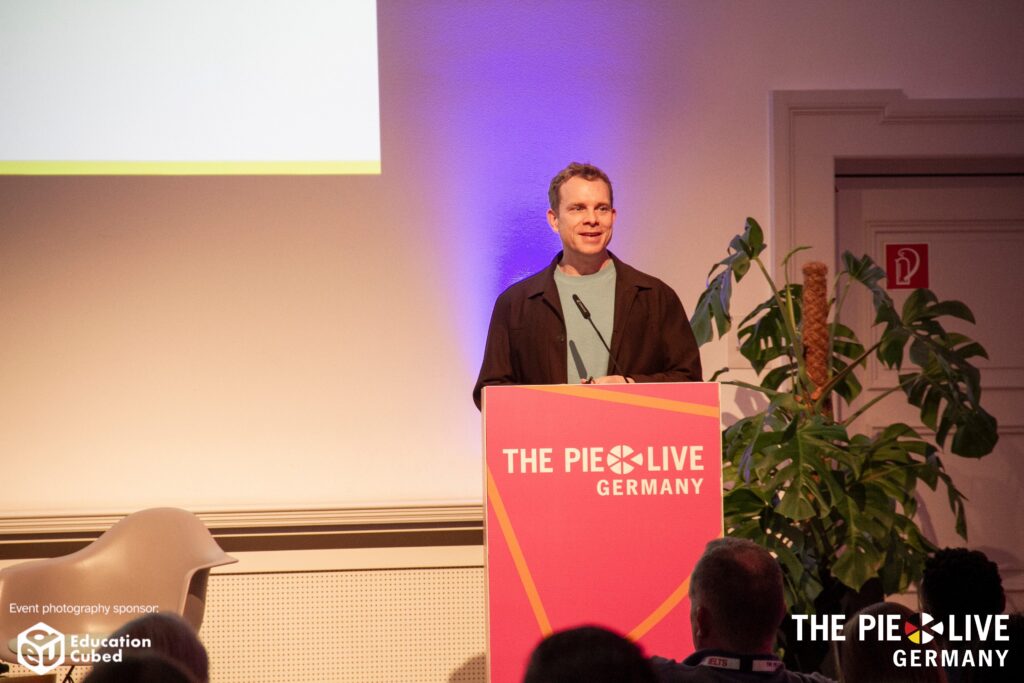
Jonas Marggraf speaking at The PIE Live Germany podium, presenting data on international students in Germany
Jonas Marggraf, Managing Director of DEGIS, opening The PIE Live Germany 2026 in Berlin.

Germany’s position in the global competition for international students

Germany is the world’s fourth-largest host country for international students, attracting 5.8% of the 7.3 million students who study abroad. Of the five major destinations compared in the presentation, Germany was the only one to record growth in the latest reporting year, with a 4% increase in new international students.

The number of international degree students in Germany has reached 426,179, up 33% in six years. This growth is driven mainly by students from outside the European Union: non-EU student numbers rose by 43%, while EU student numbers have remained relatively stable since 2021. India is now the largest source country of new international students, followed by China, Türkiye, Pakistan and Iran.

International students are also helping to address Germany’s skills shortages. Between 2017 and 2025, the number of international first-year students in STEM subjects rose by 40%, while the number of German first-year students fell by 23%.

Sources: DAAD/DZHW, Wissenschaft weltoffen kompakt 2026, fig. 4 (2023 data); Institute of International Education (IIE), Open Doors, Fall 2025 snapshot (United States); Higher Education Statistics Agency (HESA), 2024/25 (United Kingdom); Australian Department of Education, 2025 (Australia); Immigration, Refugees and Citizenship Canada (IRCC) data via CIMM, March 2026 (Canada); Federal Statistical Office of Germany (Destatis), table 21311-07 (Germany).

International student recruitment, retention and long-term intentions

According to the Internationals Employability Framework, a survey of 6,418 international students, graduates and professionals conducted by DEGIS and the Stifterverband in September 2025, 95% of respondents said Germany was their first choice or one of their preferred study destinations. Career opportunities, quality of life and social security were among the most important factors in their decision.

But students’ experiences don’t always match their expectations. They viewed career opportunities and social security positively, while opinions of Germany’s openness, visa procedures and bureaucracy were less favourable. Only 37% rated Germany positively for its visa and bureaucratic processes, while 63% reported satisfaction with their immigration journey.

77% of respondents intend to work in Germany: 45% plan to stay, while 32% hope to work in the country for a period before leaving.

Attracting talent, in other words, is only half the task. Germany must also improve the conditions that allow students to complete their studies, enter the labour market and build long-term careers.
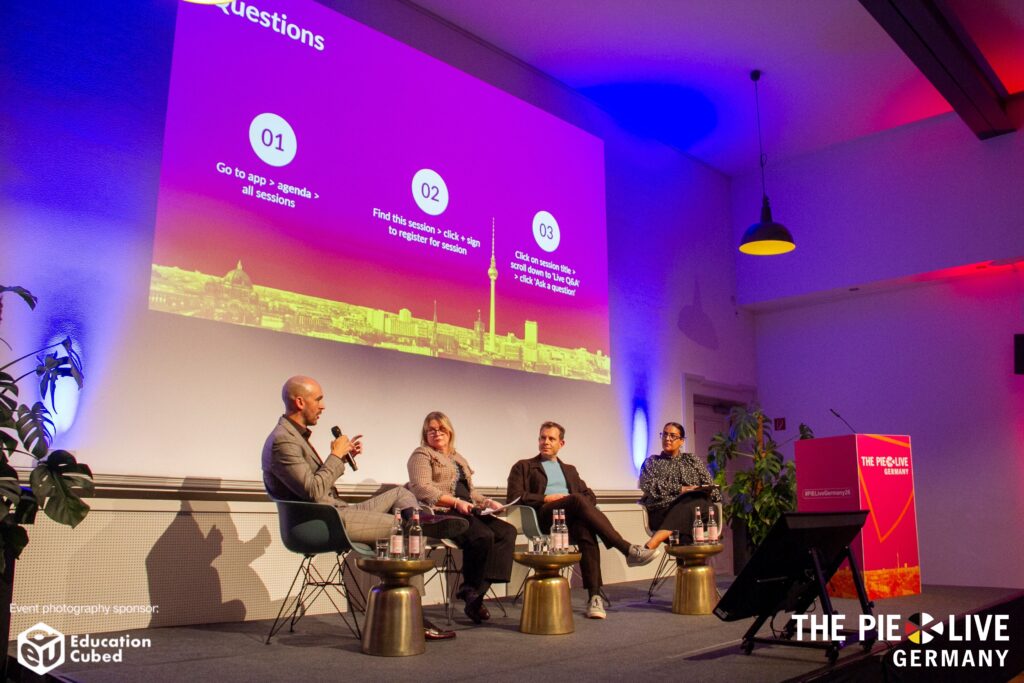
Wide view of The PIE Live Germany stage, with four panellists seated in front of a large screen showing audience Q&A instructions
The panel taking audience questions at The PIE Live Germany 2026.

What helps international students in Germany find work

The transition into work was the central theme of the employability panel. DEGIS research identifies some factors associated with employment outcomes among international graduates.

German language proficiency is the factor most strongly associated with employment. At the time of the survey, 27% of graduates with the lowest reported German proficiency were employed, compared with 70% of fluent speakers.

The type of student job matters, too. Graduates who held a student job related to their field of study had an employment rate of 63%, compared with 44% for those who worked in an unrelated field and 49% for those with no student job.

Finally, studying in Germany appears to provide a strong route into employment: international graduates of German universities had employment rates about three times higher than people who came to Germany on a job-seeker visa.

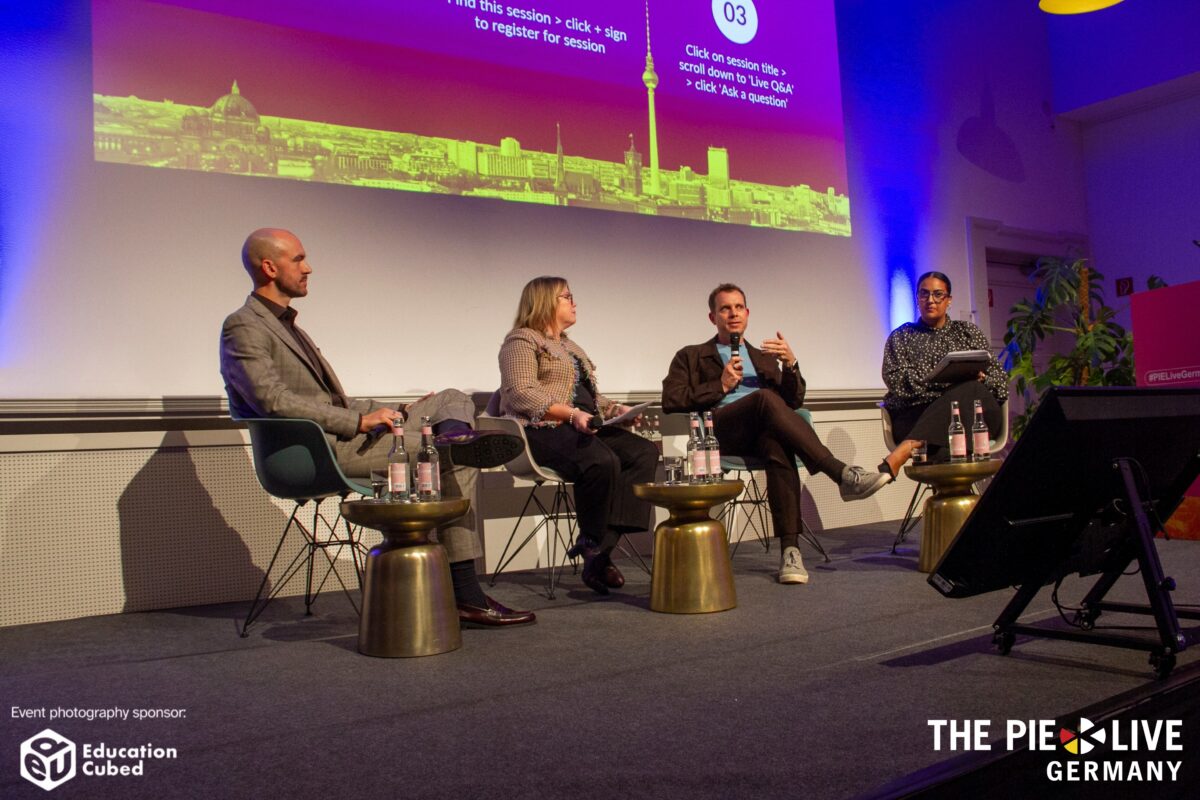
Jonas Marggraf speaking during a panel discussion at The PIE Live Germany
Jonas Marggraf discussing what helps international graduates move from university into work in Germany.

Explore the full presentation

The complete presentation brings together the data, charts and underlying sources discussed during the event. It draws on data from Destatis, DAAD/DZHW, the OECD, the German Economic Institute (IW) and DEGIS’s own research.  Download the presentation (PDF).

We thank The PIE for hosting the event and all speakers and panellists for contributing to the discussion. We look forward to continuing the exchange on the future of international higher education in Germany. 

To follow our research on international students in Germany, sign up for DEGIS Policy Lab updates or follow us on LinkedIn.
Categories
Events News

DEGIS Launches its Policy Lab at the F.A.Z. Europakonferenz 2026

On 9 September 2026, DEGIS – the German Association for International Students – officially launched the DEGIS Policy Lab at the F.A.Z. Europakonferenz in Berlin. The launch took place during the panel “Wettbewerbsfaktor internationale Studierende – Gemeinsam Europas Zukunftsfähigkeit sichern” (“International students as a competitive factor – securing Europe’s future together”), part of the conference’s afaternoon programme on innovation and Europe’s competitiveness.

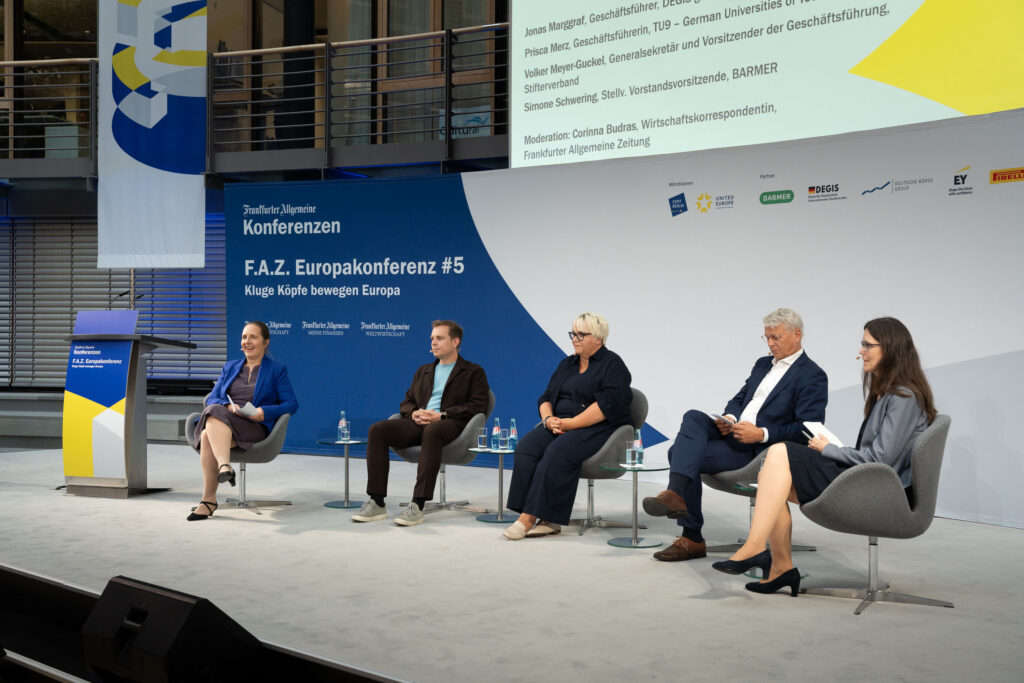
The panel was moderated by Corinna Budras, Business Correspondent at the Frankfurter Allgemeine Zeitung, and brought together Jonas Marggraf, Managing Director of DEGIS; Prisca Merz, Managing Director of the TU9 Alliance (German Universities of Technology); Simone Schwering, Deputy Chair of the Executive Board of BARMER; and Volker Meyer-Guckel, Secretary General and Chairman of the Executive Board of the Stifterverband.

To watch the panel discussion featuring DEGIS, access the full conference recording here. Our panel starts at 5:17:30.

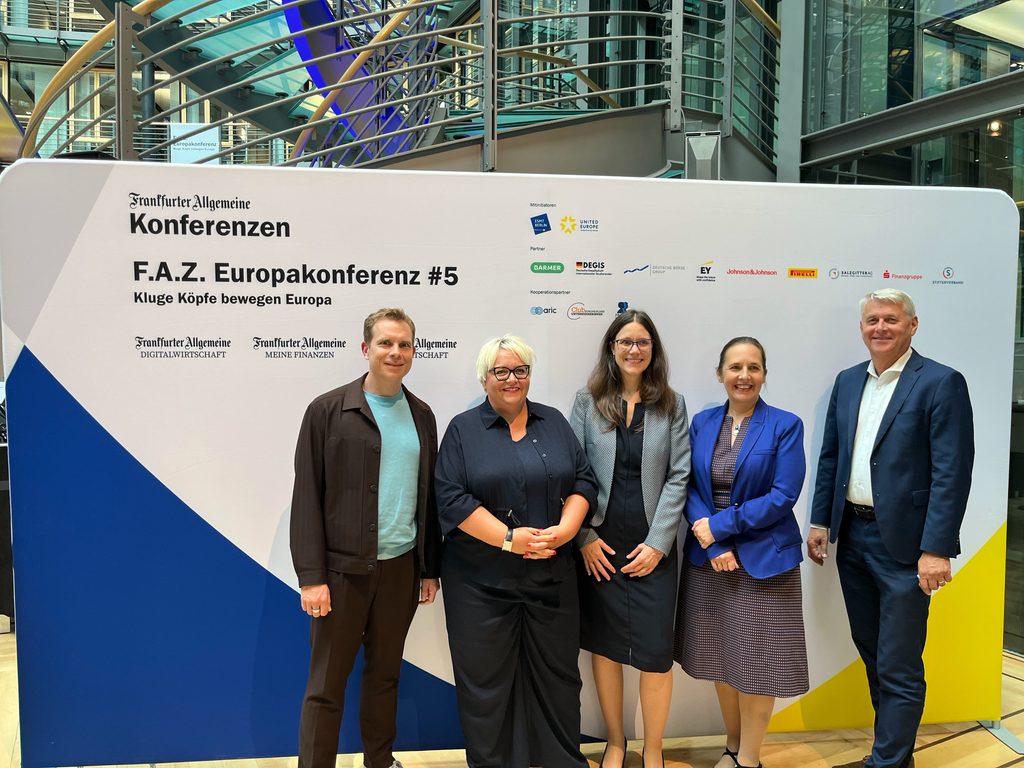
The panellists and moderator Corinna Budras during the discussion on international students and Europe's competitiveness at the F.A.Z. Europakonferenz 2026.
Discussion during the panel ‘International students as a competitive factor – securing Europe’s future together’ at the F.A.Z. Europakonferenz 2026. © FBM/Johannes Jost.

What is the DEGIS Policy Lab?

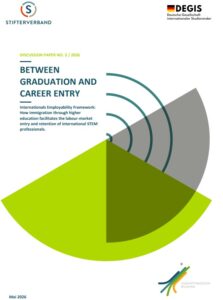
Since 2019, DEGIS has built a volunteer-led community active in more than 35 cities across Germany, with 1,000 volunteers and more than 40,000 community members. Over time, this community work has increasingly turned into research. What began as individual discussion papers became a regular series, most recently Between Graduation and Career Entry – Internationals Employability Framework, published with the Stifterverband in May 2026.

The Policy Lab makes this a standing research initiative. It combines the lived experience of our community with data from network partners who support more than 100,000 international students each year. From this, it develops concrete policy recommendations on what helps international students succeed in Germany: in their studies, at work and in everyday life.

“Whether someone truly arrives here, finds a job and stays is rarely decided by their final grade. It’s decided by language, by practical experience, and by whether they have a network on the ground. Nobody crosses the world just to fill a labour gap – people arrive with a plan for their life here. Whether Germany delivers on that plan will decide whether they stay, and how competitive the country is in ten years.” – Jonas Marggraf.

Our first recommendation: invest in the university pathway

The Policy Lab’s opening recommendation is that Germany should concentrate its integration funding on the route that demonstrably works: the university pathway, end to end, from enrolment to career entry.

The evidence comes from the Internationals Employability Framework, a survey of 6,418 international students, graduates and professionals from 134 countries, conducted in September 2025. It found that:

  • People who come to Germany via a university are three times as likely to find employment as those who don’t.
  • Those who find a job are 60% more likely to stay in Germany permanently.

The timing matters. Almost a quarter of everyone working in STEM occupations in Germany, some 1.85 million people, is over 55 and will leave the labour market within the next ten years (Federal Employment Agency 2025, DEGIS calculations). In our view, closing that gap is less about opening new immigration channels than about funding the one with the strongest measurable impact.

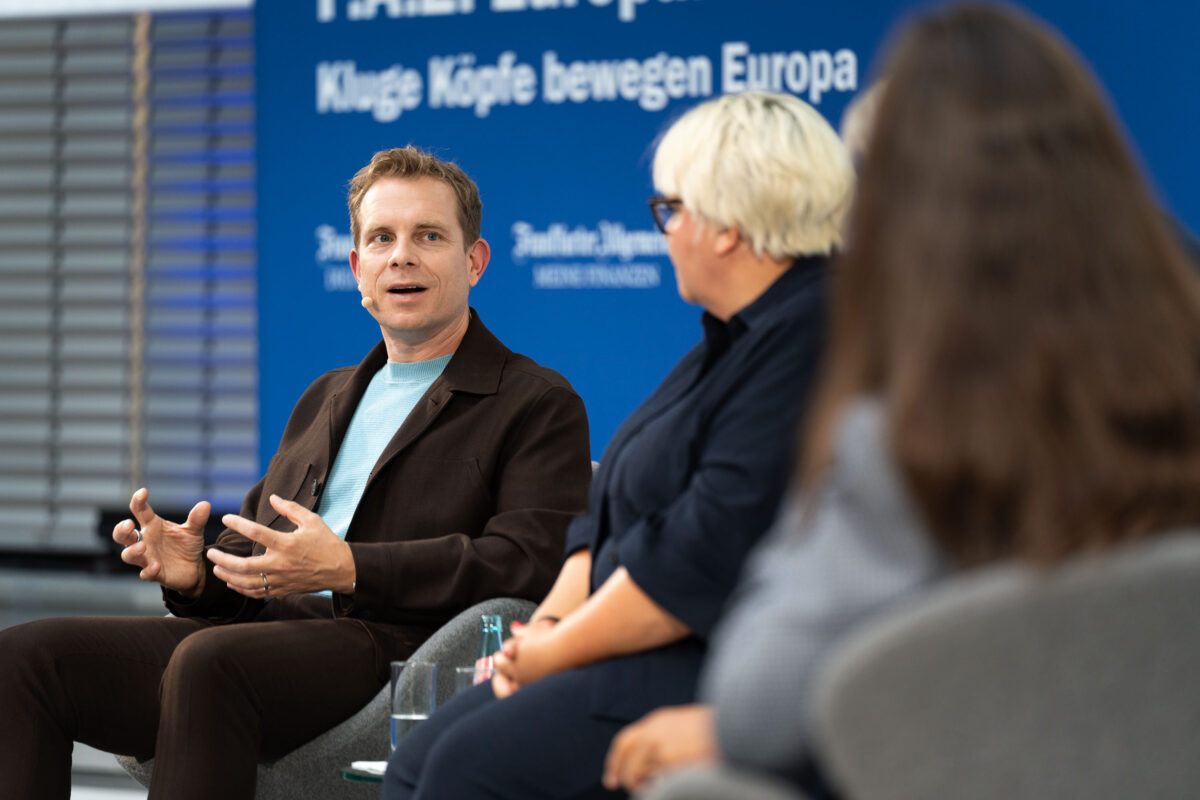
DEGIS Managing Director Jonas Marggraf speaking during the F.A.Z. Europakonferenz 2026 panel in Berlin.
Jonas Marggraf sharing DEGIS’s insights during the conference panel. © FBM/Johannes Jost.

Key takeaways from the panel

Germany’s reputation is strong, but it needs renewing

Germany is still the most attractive non-English-speaking study destination, thanks largely to free tuition and accessible healthcare. But as Jonas Marggraf put it, Germany risks living off its past reputation. “Made in Germany” still carries weight in countries such as India, yet there is no coordinated effort to promote Germany abroad. At international education fairs, he observed, the US, Canada and Ireland have large stands, while Germany may have little more than a roll-up banner.

The visa is the first impression

For many students, Germany’s welcome begins at the embassy, and it can be slow. The Skilled Immigration Act and centralised visa processing have brought improvements in some countries. But Prisca Merz described waits of up to 27 months in extreme cases, which push talented students towards faster destinations.

Late arrival has lasting effects. DEGIS’s first study, in 2019, found that 40% of international students arrived after the semester had started, missing orientation and the chance to integrate from day one.

Universities as service hubs

One of the main topics on the panel was the role universities play in supporting international students, and it’s closely tied to the Policy Lab’s first recommendation.

Many universities simply don’t have the capacity. A mid-sized university of applied sciences, for example, may have only 1.5 full-time staff in its international office. Marggraf suggested redirecting existing integration funding to universities, so they can become service hubs that support students all the way from enrolment to their first job.

The other panellists shared ideas on how this could work in practice. Simone Schwering suggested bringing services such as health insurance, authorities and visa offices together on campus, with documents in several languages and simple forms. She also noted that easy access to statutory health insurance is already one of Germany’s strengths.

Prisca Merz gave the example of Stuttgart, where the immigration office, the Federal Employment Agency, the university and local employers work together through a Welcome Center. She stressed that projects like this need long-term funding to be rolled out more widely.

Volker Meyer-Guckel added what the Stifterverband has learned from successful projects: the most effective ones start on a student’s first day and have the support of leaders such as university presidents and mayors.

Language and belonging

Language is the biggest hurdle, Jonas Marggraf said, yet few English-taught programmes require German courses through to graduation. Volker Meyer-Guckel added a second risk: student communities staying among themselves. Language courses achieve little without real connections on campus and in the wider city.

This is the gap DEGIS was built to close. Across more than 35 cities, our volunteer community connects international students with German students, universities and employers.

The four panellists and moderator Corinna Budras together after the DEGIS Policy Lab launch panel at the F.A.Z. Europakonferenz 2026.
The panellists and panel moderator after the discussion at the F.A.Z. Europakonferenz. © FBM/Johannes Jost.

What comes next

We thank the F.A.Z. for hosting the conference, Corinna Budras for moderating, and Prisca Merz, Simone Schwering and Volker Meyer-Guckel for an open and practical discussion. Thank you also to everyone who visited the DEGIS stand.

The DEGIS Policy Lab will publish regular discussion papers on what helps international talent succeed in Germany. Sign up for Policy Lab updates or follow DEGIS on LinkedIn.

Categories
Publications

Between Graduation & Career Entry: New Discussion Paper on International Talent in Germany

Download the full publication: English version | German version
Internationals Employability Framework: How immigration through higher education facilitates the labour-market entry and retention of international STEM professionals

Berlin, 7th May 2026 — Germany’s long-term competitiveness depends on its ability to attract, support, and retain international talent. The new discussion paper Between Graduation and Career Entry by Stifterverband and DEGIS shows that immigration through higher education is one of the most effective pathways for international STEM professionals to enter the German labour market and stay in Germany long-term.

Based on survey data from more than 6,400 international students, graduates, job seekers, and working professionals, the discussion paper examines which factors support successful labour-market entry, workplace integration, and long-term retention in Germany.

The findings are clear: internationals who come to Germany through higher education are three times more likely to find employment than those who come directly for job search. They also integrate more easily into German workplace culture, report higher job satisfaction, and are more likely to extend their intention to stay in Germany.

At the same time, the discussion paper highlights the scale of Germany’s skilled-worker challenge. Around 1.85 million STEM employees over the age of 55 are expected to leave the labour market within the next ten years. Without the growth in foreign skilled workers, Germany’s current STEM skills gap would be 3.2 times larger.

“Germany’s competitiveness depends on international talent, and the data leaves no doubt: students who come through a German university are three times more likely to find a job here. I am convinced universities are our most powerful lever — and policy must now follow the evidence: invest where the impact is highest, and embed language, practical experience, and networks in every programme. We now know what works — and that’s the path to success: for the students who chose Germany, and for Germany itself.”

Jonas Marggraf
Managing Director, DEGIS

At a time when many negative stories around studying and working in Germany are circulating, the discussion paper offers a clearer picture: we now have a recipe for success. German-language proficiency, self-efficacy, academic performance, and practical experience during studies emerge as key factors for entering the German labour market.

Field-related student jobs are especially relevant, with internationals who gain work experience related to their field of study having an 84% higher probability of finding employment, while unrelated side jobs reduce the likelihood of successful labour-market entry.

Successful employment is also closely linked to long-term retention. Internationals who originally planned to stay in Germany only temporarily are 75% more likely to want to stay permanently once they find a job.

For DEGIS, the findings underline the importance of supporting international students not only during their studies, but throughout their transition into the German labour market. Universities, companies, and policymakers all have a role to play in strengthening Germany’s position as a destination for international talent.

Recommended actions include giving immigration through higher education greater political priority, expanding university support structures for international students, embedding German-language learning and practical experience more firmly into study programmes, and strengthening cooperation between universities and companies.

With the right support structures in place, international students can become one of Germany’s strongest pathways to skilled-worker retention, integration, and long-term competitiveness.

Read the full discussion paper:
Download English PDF
Download German PDF

The findings will also be discussed in a Stifterverband online session on May 11, 2026, as part of the “ZMB Deep Dive” series on the sustainable labour-market integration of international students.
Find out more & register here

Categories
Statements

Statement: Ensuring Access for Iranian Students to Study in Germany

Thousands of Iranian students who have been admitted to German universities currently have no way to apply for their student visa. The German Association for International Students (DEGIS) calls for immediate action.

Due to the current diplomatic and security situation and the ongoing closure and restricted operations of the German Embassy in Tehran, many admitted Iranian students, including those applying for Bachelor’s programmes and preparatory pathways (Studienkolleg, studienvorbereitende Programme), cannot currently submit their student visa applications. For these students, the situation is not simply a delay; it means expired university admissions, lost Sperrkonto deposits, housing contracts that cannot be taken up, and, in many cases, a full year’s delay before they can reapply.

In 2026, an estimated 5,722 Iranian students are expected to begin their studies in Germany. Without an accessible pathway, many of these students will lose their university place entirely.

Experience has shown that practical solutions exist: during earlier disruptions, the Federal Foreign Office (Auswärtiges Amt) enabled visa applications through German embassies in third countries. A similar mechanism is needed now—urgently.

DEGIS calls on the Federal Foreign Office to implement the following measures without delay:

  • A formal temporary mechanism allowing affected students to apply for student visas outside Iran, with processing timelines aligned to university intake deadlines
  • Designation of German embassies in accessible third countries as substitute processing posts for Iranian student visa applications, with adequate staffing and capacity
  • Timely, multilingual communication to affected students and German universities, including clear timelines, alternative application procedures, and guidance to universities on extending admission validity for students affected by processing delays

Germany’s Fachkräftestrategie and coalition agreement both recognise international students as essential to the country’s economic future. Iranian graduates are among the most likely to remain in Germany and enter the skilled workforce. Blocking their path to study undermines a policy priority that Germany itself has set.

We call on German universities to extend the validity of admissions for affected Iranian students and to communicate proactively with applicants. We encourage student organisations, Studierendenwerke, and members of the Bundestag to support this effort by raising the issue with the Federal Foreign Office directly.

Sincerely,
DEGIS
Deutsche Gesellschaft internationaler Studierender