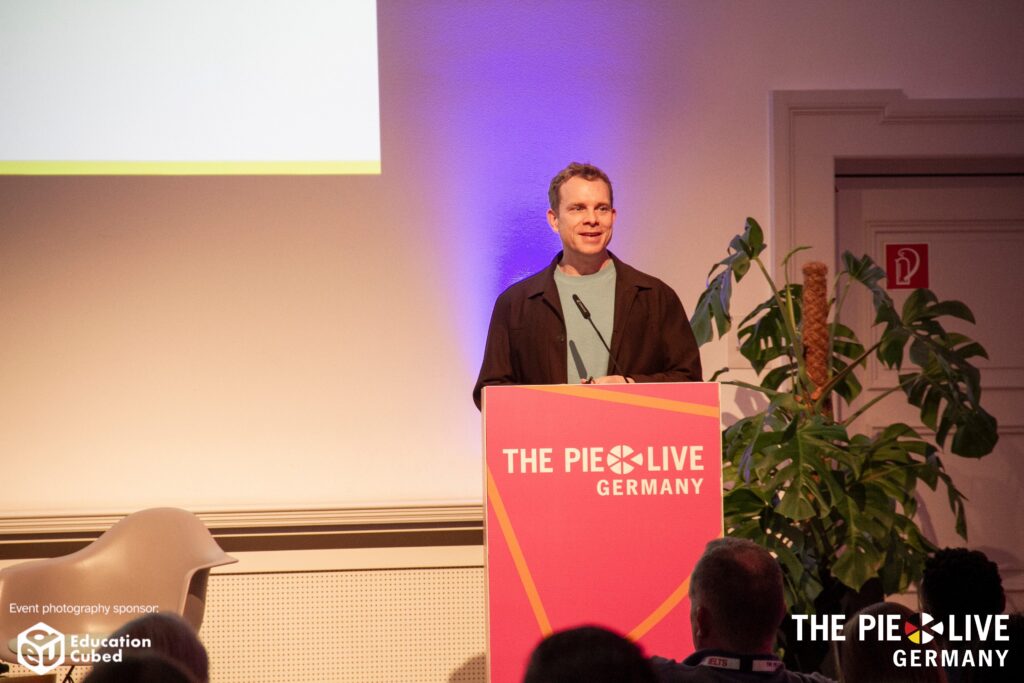
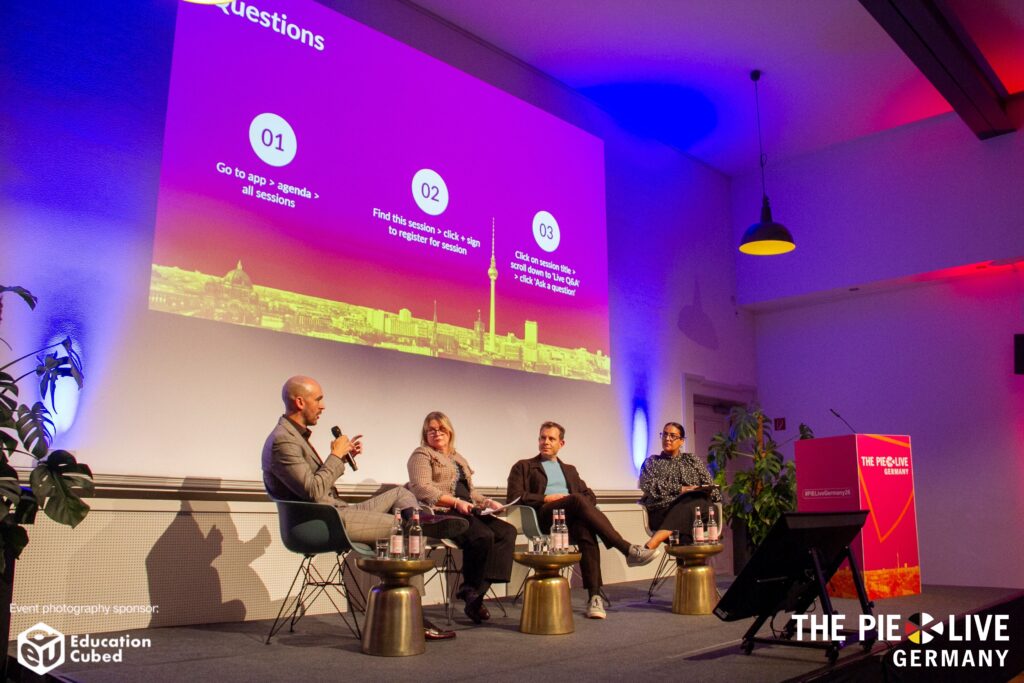
At The PIE Live Germany, held in Berlin on 30 October 2026, Jonas Marggraf, Managing Director at DEGIS (German Association for International Students), opened the event with insights into Germany’s competitiveness in international higher education and the factors that influence international graduates’ decisions to stay and contribute to the labour market.
The presentation was prepared by the DEGIS Policy Lab, which we launched in September at the F.A.Z. Europakonferenz. It combined national and international data with DEGIS surveys of thousands of international students. These are the findings that stood out.
Germany’s position in the global competition for international students
Germany is the world’s fourth-largest host country for international students, attracting 5.8% of the 7.3 million students who study abroad. Of the five major destinations compared in the presentation, Germany was the only one to record growth in the latest reporting year, with a 4% increase in new international students.
The number of international degree students in Germany has reached 426,179, up 33% in six years. This growth is driven mainly by students from outside the European Union: non-EU student numbers rose by 43%, while EU student numbers have remained relatively stable since 2021. India is now the largest source country of new international students, followed by China, Türkiye, Pakistan and Iran.
International students are also helping to address Germany’s skills shortages. Between 2017 and 2025, the number of international first-year students in STEM subjects rose by 40%, while the number of German first-year students fell by 23%.
Sources: DAAD/DZHW, Wissenschaft weltoffen kompakt 2026, fig. 4 (2023 data); Institute of International Education (IIE), Open Doors, Fall 2025 snapshot (United States); Higher Education Statistics Agency (HESA), 2024/25 (United Kingdom); Australian Department of Education, 2025 (Australia); Immigration, Refugees and Citizenship Canada (IRCC) data via CIMM, March 2026 (Canada); Federal Statistical Office of Germany (Destatis), table 21311-07 (Germany).
International student recruitment, retention and long-term intentions
According to the Internationals Employability Framework, a survey of 6,418 international students, graduates and professionals conducted by DEGIS and the Stifterverband in September 2025, 95% of respondents said Germany was their first choice or one of their preferred study destinations. Career opportunities, quality of life and social security were among the most important factors in their decision.
But students’ experiences don’t always match their expectations. They viewed career opportunities and social security positively, while opinions of Germany’s openness, visa procedures and bureaucracy were less favourable. Only 37% rated Germany positively for its visa and bureaucratic processes, while 63% reported satisfaction with their immigration journey.
77% of respondents intend to work in Germany: 45% plan to stay, while 32% hope to work in the country for a period before leaving.
Attracting talent, in other words, is only half the task. Germany must also improve the conditions that allow students to complete their studies, enter the labour market and build long-term careers.
What helps international students in Germany find work
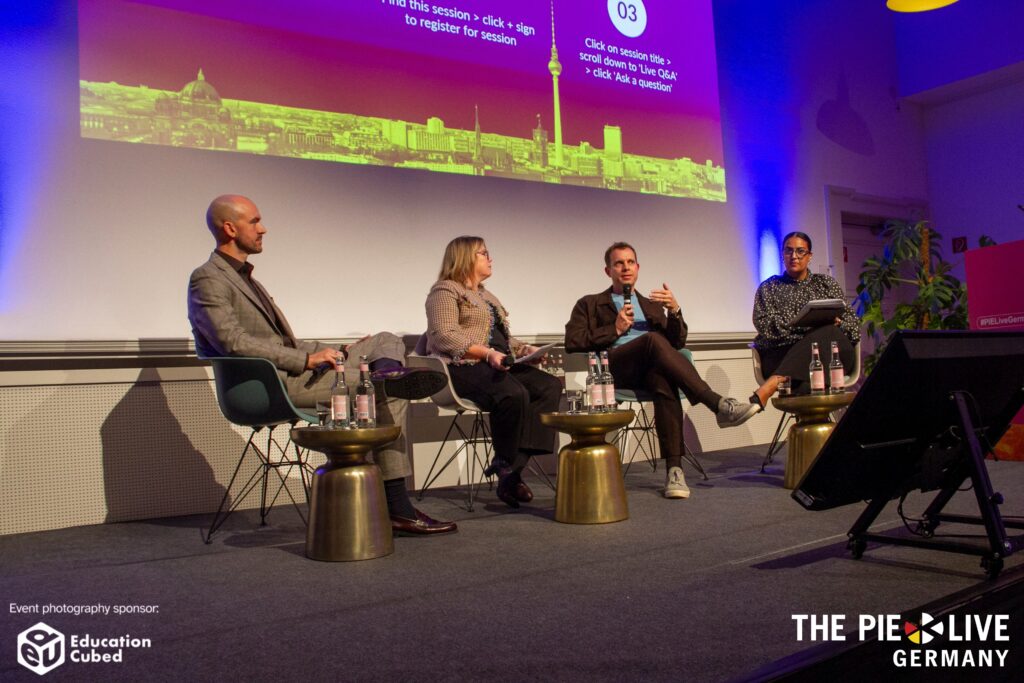
The transition into work was the central theme of the employability panel. DEGIS research identifies some factors associated with employment outcomes among international graduates.
German language proficiency is the factor most strongly associated with employment. At the time of the survey, 27% of graduates with the lowest reported German proficiency were employed, compared with 70% of fluent speakers.
The type of student job matters, too. Graduates who held a student job related to their field of study had an employment rate of 63%, compared with 44% for those who worked in an unrelated field and 49% for those with no student job.
Finally, studying in Germany appears to provide a strong route into employment: international graduates of German universities had employment rates about three times higher than people who came to Germany on a job-seeker visa.

Explore the full presentation
The complete presentation brings together the data, charts and underlying sources discussed during the event. It draws on data from Destatis, DAAD/DZHW, the OECD, the German Economic Institute (IW) and DEGIS’s own research. Download the presentation (PDF).
We thank The PIE for hosting the event and all speakers and panellists for contributing to the discussion. We look forward to continuing the exchange on the future of international higher education in Germany.
To follow our research on international students in Germany, sign up for DEGIS Policy Lab updates or follow us on LinkedIn.